
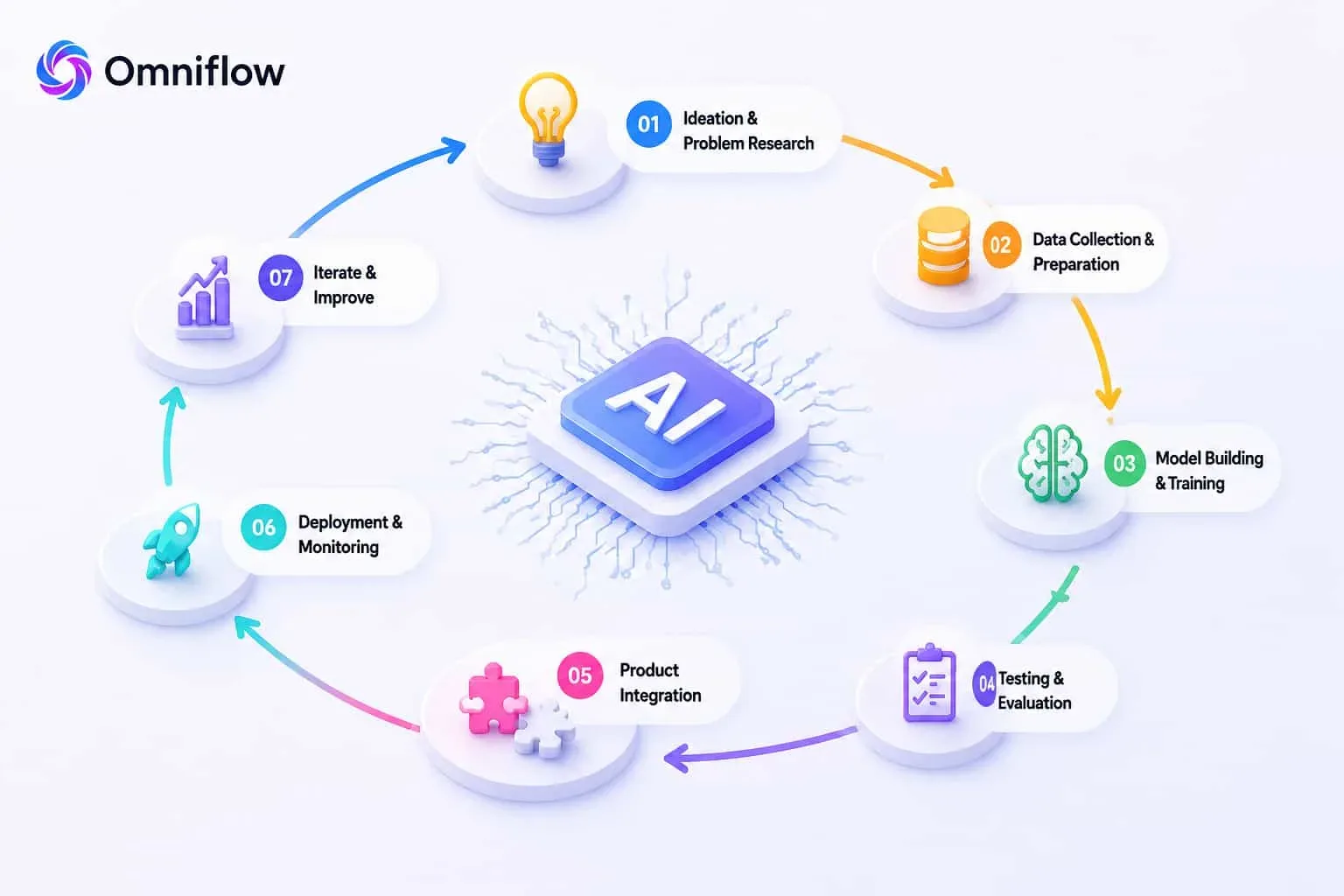
 Every successful product starts with an idea.
The challenge isn't coming up with the idea—it's turning that idea into something customers can actually use.
Whether you're building a SaaS platform, AI application, internal tool, marketplace, or customer portal, the path from idea to working software follows the same fundamental process.
Today, modern product teams can move from an idea to requirements, designs, and implementation significantly faster than traditional development workflows. Omniflow's own guide on turning an idea into a working AI app highlights how teams can move from concept to implementation without months of upfront planning.
What It Means to Turn a Product Idea Into a Working Application
Many people think building a product starts with coding.
It doesn't.
Successful products start with clarity.
Before development begins, teams need to understand:
Who the product is for
What problem it solves
Which features matter most
How users will interact with it
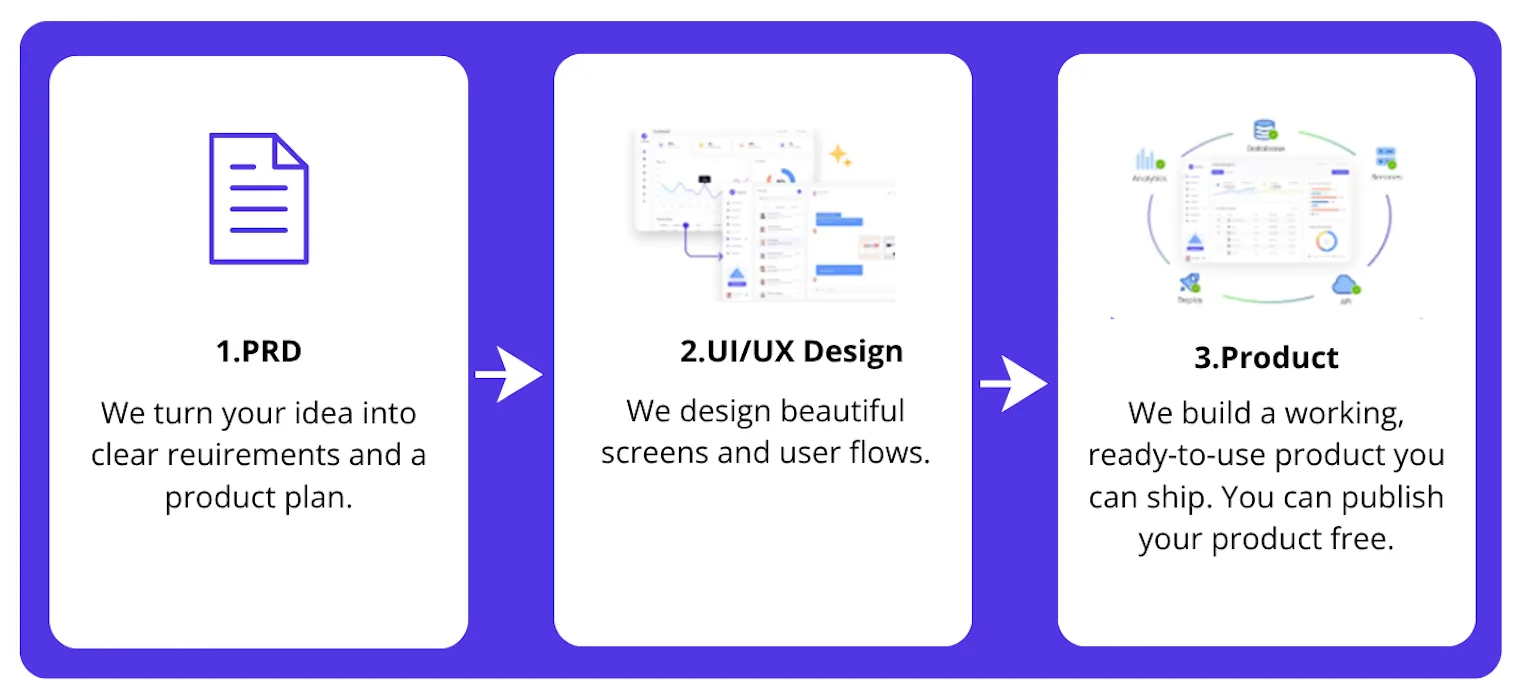
The strongest products move through a structured process that connects planning, design, and development into a single workflow.
Step 1: Validate the Problem
Before building anything, make sure the problem is worth solving.
Ask yourself:
Who experiences this problem?
How frequently does it occur?
How are people solving it today?
Would someone pay for a better solution?
Many founders spend months building features before validating demand. The best teams validate first and build second.
Example
Instead of:
Build an AI CRM.
Define:
Build a CRM for recruiting agencies that automates candidate follow-ups and interview scheduling.
The more specific the problem, the easier it becomes to build the right solution.
Step 2: Create a Product Requirements Document (PRD)
Once you've validated the problem, create a Product Requirements Document.
A PRD defines:
Product goals
User personas
Core features
User stories
Success metrics
Teams that skip product requirements often spend weeks rebuilding features after development starts. A PRDhelps align product, design, and engineering before resources are invested.
"As a startup founder, I want to validate product ideas quickly so that I can focus development time on features customers actually need."
This simple user story immediately clarifies who the feature is for, what outcome the user wants, and why it matters. Product teams can use user stories like these to prioritize features, align stakeholders, and create more effective product requirements documents.
Step 3: Define Your Minimum Viable Product (MVP)
One of the most common mistakes founders make is trying to build every feature in the first version of their product.
The reality is that most successful products launch with far fewer features than originally planned.
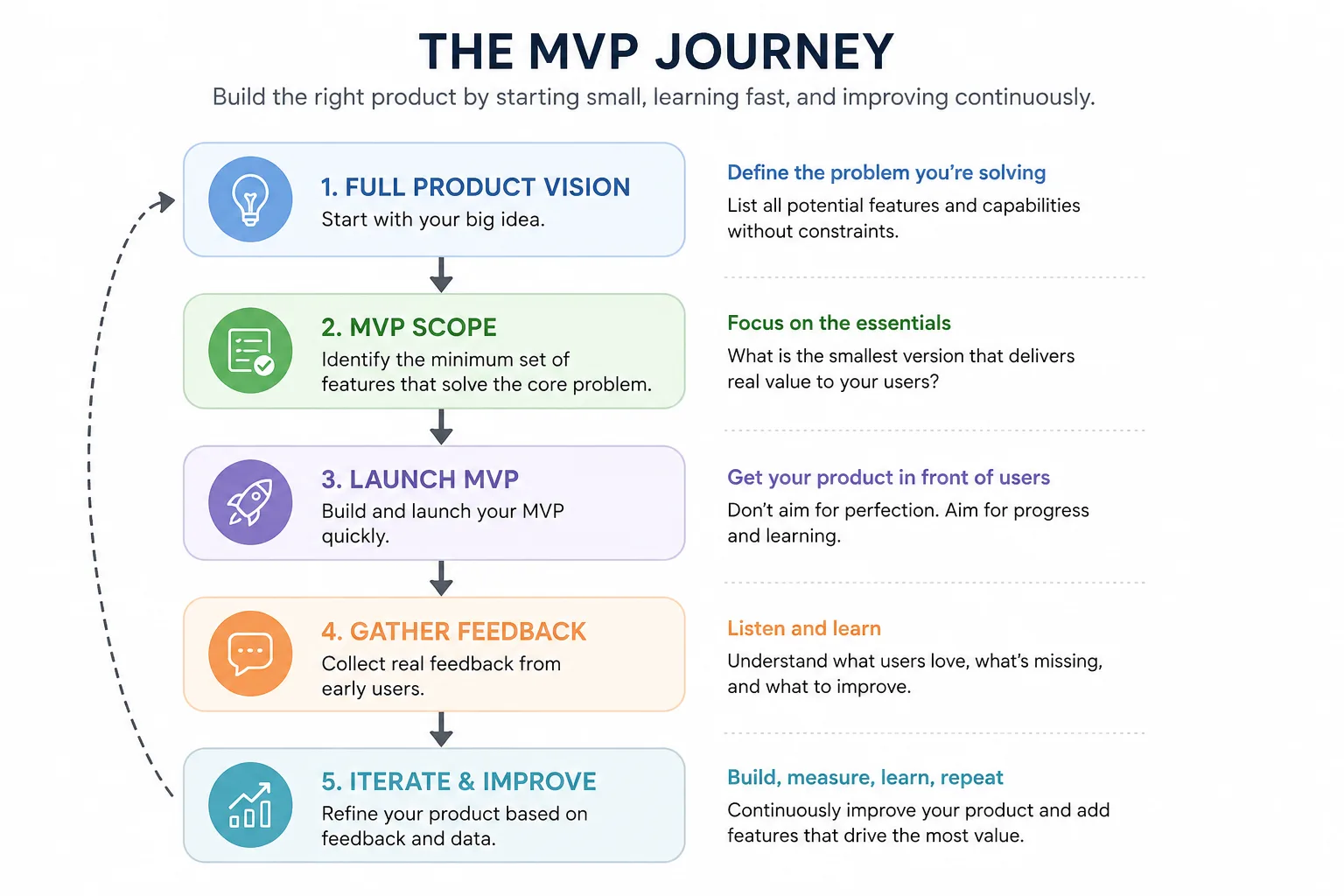
Instead of building everything at once, focus on creating a Minimum Viable Product (MVP)—the smallest version of your product that solves the core problem for users.
An MVP allows you to:
Validate demand faster
Reduce development costs
Gather real user feedback
Improve the product based on actual usage
Launch weeks or months sooner
The goal isn't to build a perfect product.
The goal is to learn as quickly as possible.
Example: Recruiting CRM
Let's say you're building a CRM for recruiting agencies.
Your initial feature list might include:
Candidate management
AI-generated candidate summaries
Interview scheduling
Automated follow-ups
Team collaboration
Analytics dashboard
Email integrations
SMS integrations
Custom reporting
Trying to build everything at once can dramatically increase complexity and delay launch.
A smarter MVP might focus on just three features:
Candidate management
Interview scheduling
Automated follow-ups
These features solve the primary problem while allowing users to start receiving value immediately.
Additional functionality can be added later based on customer feedback.
MVP Prioritization Framework
When deciding what belongs in version one, ask:
Must Have
Required for the product to function
Should Have
Important but not critical
Could Have
Nice-to-have features that can wait
This simple framework helps teams focus on delivering value quickly instead of building features that may never be used.
Build for Learning, Not Perfection
Many founders assume users will want every feature they've imagined.
In reality, users often behave differently than expected.
Launching an MVP allows you to test assumptions with real customers before investing significant development resources.
The faster you learn, the faster you can improve.
Successful products aren't built all at once.
They're built through continuous feedback, iteration, and refinement.
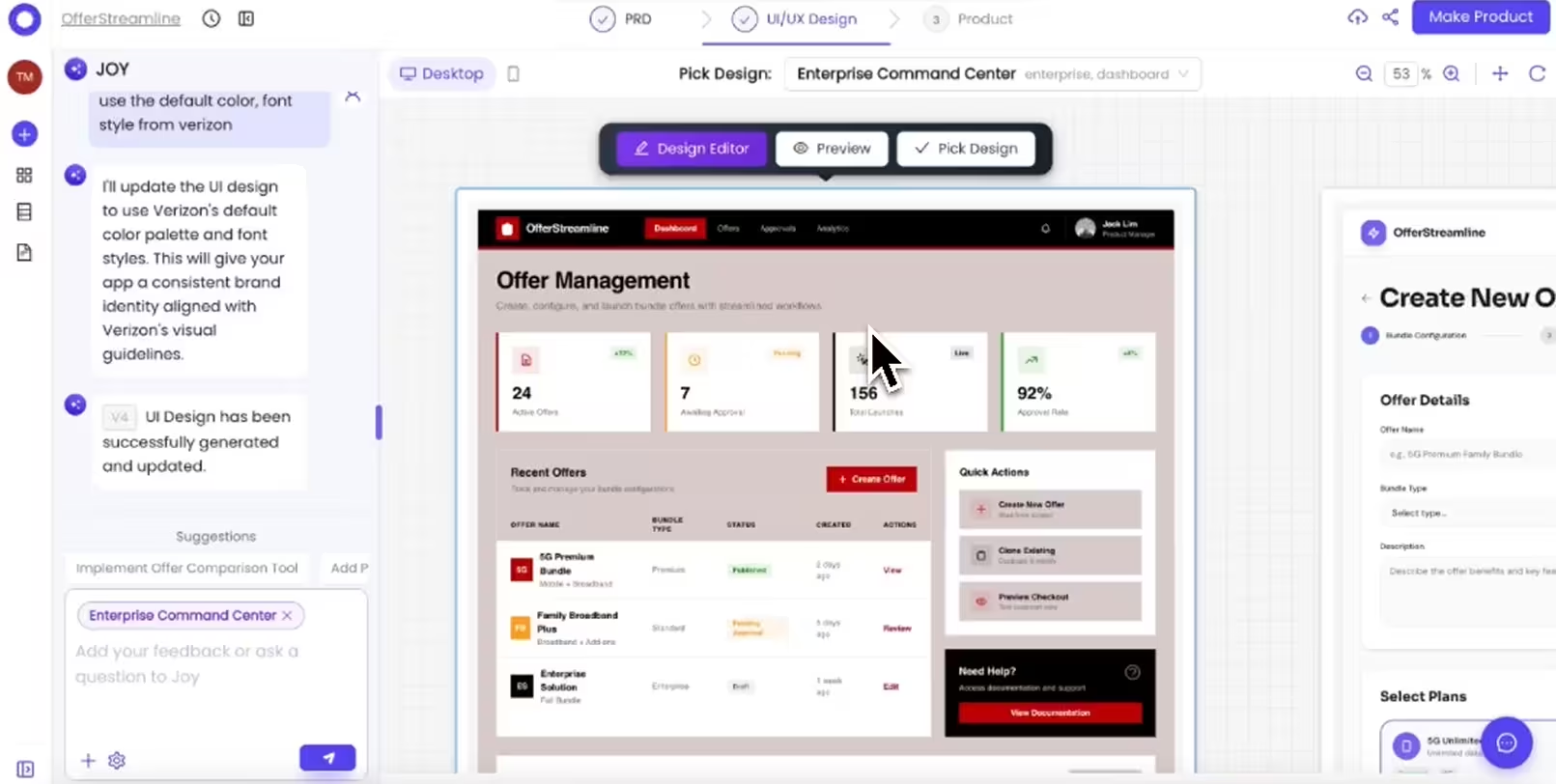
Step 4: Design the User Experience
Before writing code, define how users will interact with the product.
Questions to answer:
What is the first screen users see?
What actions should be prioritized?
How should navigation work?
What information matters most?
Designing first often prevents costly changes later.
Modern teams increasingly generate wireframes and UI concepts before implementation so they can validate assumptions earlier.
Step 5: Build the Application
Once requirements and designs are approved, development begins.
Traditionally this required:
Frontend development
Backend development
Database design
Authentication
API integrations
Infrastructure setup
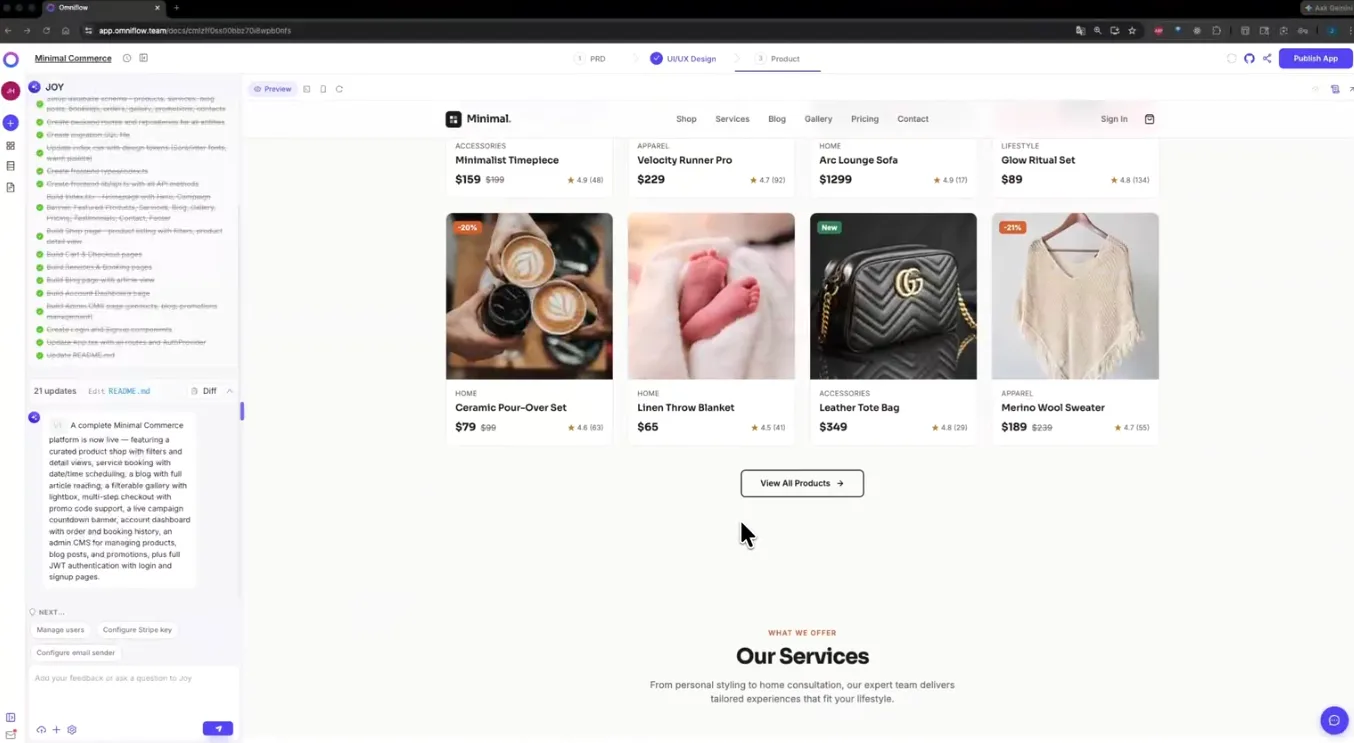
Today, AI-powered development platforms can dramatically accelerate this process by generating large portions of the application from structured requirements.
The goal isn't simply generating code.
The goal is maintaining alignment between requirements, design, and implementation as the product evolves.
Common Mistakes When Turning an Idea Into an Application
Building Before Validating
Many founders start building features before confirming customer demand.
Validate first.
Build second.
Skipping Product Planning
Without clear requirements, teams often rebuild the same functionality multiple times.
A PRD helps reduce ambiguity and keeps everyone aligned.
Overbuilding the First Version
Focus on the core workflow.
Launch quickly.
Collect feedback.
Improve over time.
Successful products rarely launch with every feature. They launch with the right feature.
How Modern Teams Move Faster
The biggest change in product development isn't just AI.
It's the ability to connect planning, design, and implementation into a single workflow.
Instead of writing requirements in one tool, designing in another, and building somewhere else, modern teams increasingly keep everything connected from the beginning. This allows faster iteration, fewer misunderstandings, and more consistent execution.
Turn Your Product Idea Into Reality
Every successful application starts with a simple idea. The difference between successful founders and everyone else isn't creativity.
It's execution.
Validate the problem.
Create a plan.
Design the experience.
Build the product.
Launch and learn.
The faster you move through that cycle, the faster you discover what users actually want.
Frequently Asked Questions
How do I turn a product idea into a working application?
The fastest path is to follow a structured process:
Validate the problem
Create a Product Requirements Document (PRD)
Define your Minimum Viable Product (MVP)
Design the user experience
Build and test the application
Launch and gather feedback
This approach helps reduce development risk and ensures you're building something users actually need.
What is a Product Requirements Document (PRD)?
A Product Requirements Document (PRD) is a blueprint that defines what you're building, who it's for, and how it should work.
A typical PRD includes:
Product goals
User personas
Features and requirements
User stories
Success metrics
A strong PRD helps product, design, and engineering teams stay aligned throughout development.
What is a Minimum Viable Product (MVP)?
A Minimum Viable Product (MVP) is the simplest version of your product that delivers value to users.
Instead of launching every planned feature, an MVP focuses on solving one core problem. This allows teams to validate demand, collect feedback, and improve the product before investing significant development resources.
How long does it take to build an application from an idea?
The timeline depends on the complexity of the product.
Simple applications can be planned and launched within weeks, while more complex platforms may take several months.
Modern AI-powered product development tools can significantly reduce planning, design, and development time by automating many parts of the workflow.
Do startups need a PRD before building?
While it's possible to build without a PRD, most successful teams benefit from having one.
A PRD helps clarify requirements, reduce scope creep, improve communication, and ensure everyone is working toward the same goals.
The earlier requirements are defined, the fewer costly changes are needed later.
What are the biggest mistakes founders make when building a product?
Some of the most common mistakes include:
Building before validating the problem
Trying to launch too many features
Skipping product planning
Ignoring user feedback
Delaying launch until the product feels perfect
Successful founders focus on learning quickly, launching early, and improving through iteration.
Can AI help turn a product idea into a working application?
Yes. Modern AI tools can help generate product requirements, user stories, technical specifications, UI designs, and implementation plans from a simple product idea.
This allows teams to spend less time on documentation and more time building, testing, and improving their products.
Ready to Start Building?
Turn your idea into:
Product Requirements
User Stories
Technical Architecture
UI Designs
Production-Ready Applications
Start building with Omniflow today.